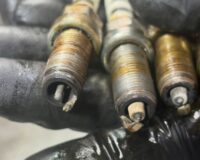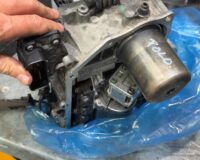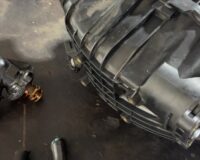
Servicing is cheap compared with a new engine. This Hyundai i30 came to us with a smoking exhaust, and it turned out the engine hadn’t been serviced for 60,000 km. The oil had turned to engine oil sludge, the damage was done, and it was time for a new engine. Expensive neglect.
The job at a glance
- Vehicle: Hyundai i30
- Problem: Smoking exhaust after 60,000 km without a service
- The outcome: Engine replacement
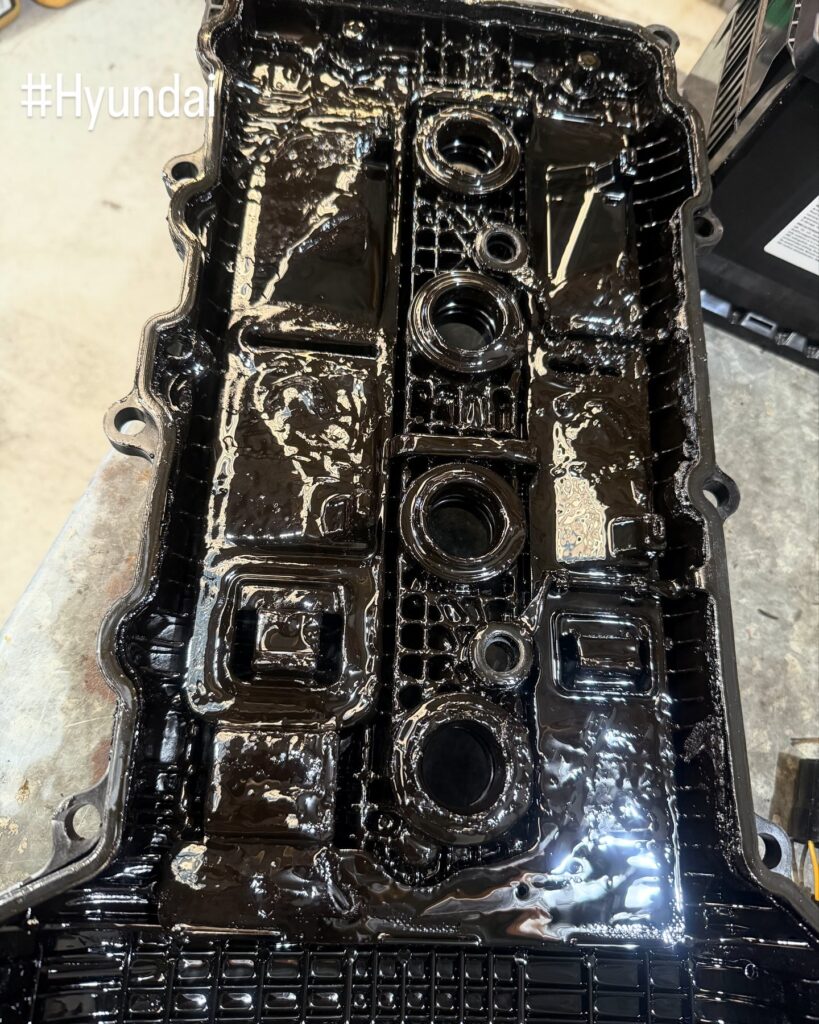
What is engine oil sludge?
Fresh engine oil is thin, clean and full of additives that protect the engine. Every kilometre you drive, it’s exposed to heat, combustion by-products, moisture and fuel. Over time the additives get used up and the oil breaks down.
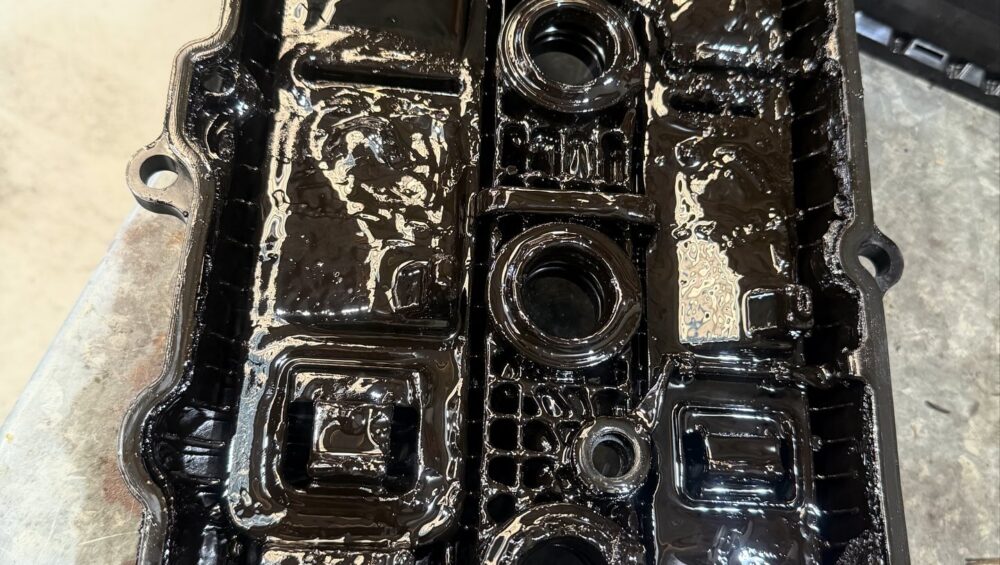
Oil turns to sludge when it’s not changed. It thickens into a tar-like substance that coats the inside of the engine, as you can see under this rocker cover and around the camshafts below. Once that happens, it can no longer flow freely or protect the engine’s moving parts.
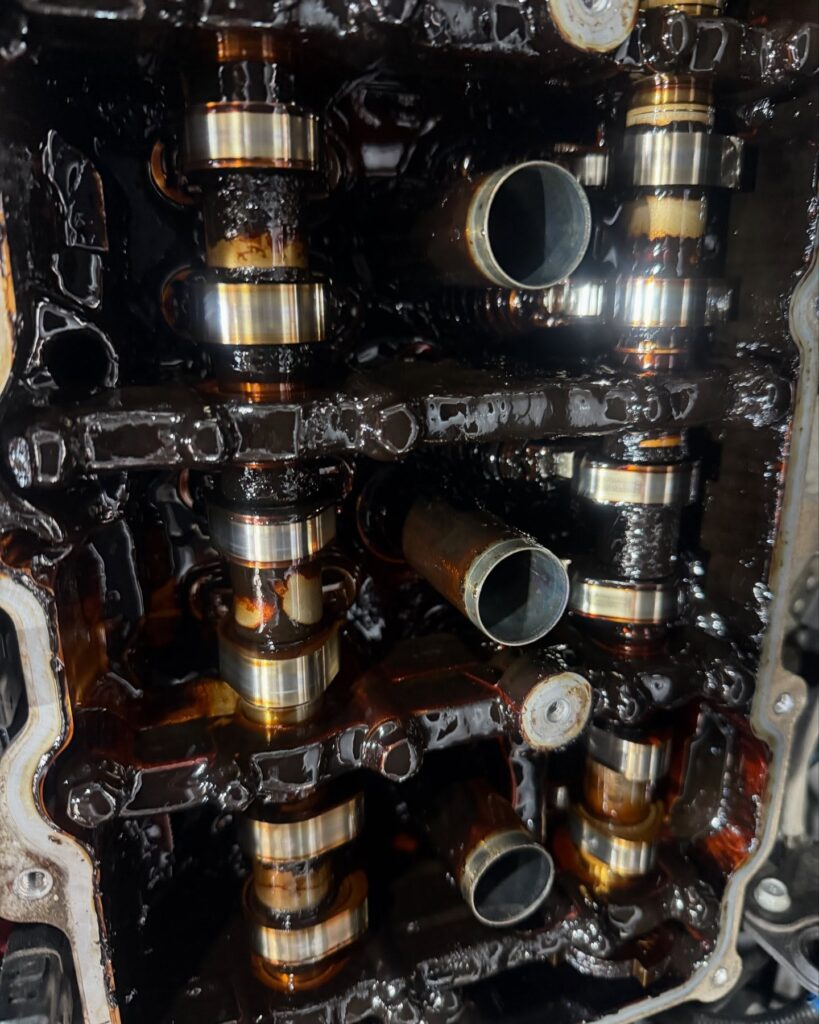
How sludge destroys an engine
Sludge blocks the small passages and the oil pickup screen that feed oil around the engine. Parts that rely on a constant film of oil, like the camshafts, crankshaft bearings, piston rings and turbochargers, start to wear quickly. Worn rings and valve stem seals let oil into the combustion chambers, which is often when owners first notice smoke from the exhaust.
By the time the smoke appears, the damage is usually well advanced. In this i30’s case, the engine wasn’t worth saving.
Old, sludgy oil draining from another engine that missed its services.
Warning signs your engine oil needs attention
- Your service is overdue, by date or by kilometres
- The oil warning light comes on, or the oil level is low on the dipstick
- Oil on the dipstick looks black and thick, or feels gritty
- Blue smoke from the exhaust, especially on start-up
- New ticking or knocking noises from the engine
How often should you change your oil?
Follow your vehicle’s logbook, which sets intervals by both time and kilometres. Whichever comes first is the one that counts. Cars that do lots of short trips, stop-start traffic, towing or dusty driving are often on a “severe” schedule with shorter intervals. We cover this in more detail in engine oil: how often does it need changing?
Using the correct grade and specification of oil matters too. Modern engines, particularly turbocharged ones, are built around specific oils.
Book your service before it costs you an engine
A regular logbook service costs a fraction of a replacement engine, and it keeps your new car warranty intact. If your car is overdue, or you’re not sure when it was last serviced, call 0478 499 369 or contact us. Our mobile mechanics can service your car at home or at work anywhere on the Gold Coast.
Need a mobile mechanic on the Gold Coast?
Certified Automotive offers professional Logbook Servicing across the Gold Coast, with mobile mechanics who come to you 7 days a week and a workshop in Mudgeeraba.
We service Burleigh, Varsity Lakes, Southport and all Gold Coast suburbs. Call 0478 499 369 for a free quote.