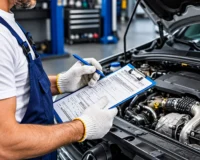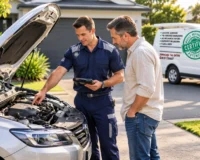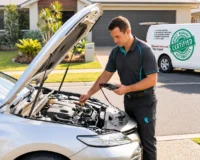
Car diagnostics on the Gold Coast help mechanics investigate faults affecting electronically monitored vehicle systems, including the engine, transmission, brakes and electrical components. A diagnostic test can retrieve stored fault codes, examine live sensor information and identify systems that need further investigation.
If your car has an illuminated check engine light, difficulty starting, poor acceleration or unusual running behaviour, diagnostic testing can help narrow down the possible causes. However, reading a fault code is only part of the process. A mechanic may also need to inspect components, test electrical circuits or carry out mechanical checks before confirming the problem.
Understanding how vehicle diagnostics work can help you distinguish between a basic code scan and a more detailed mechanical assessment. This guide explains which systems can be checked, what fault codes mean and when professional testing is appropriate.
What Is a Car Diagnostic Test?
A car diagnostic test is a process used by automotive technicians to investigate faults affecting a vehicle’s operation. Modern vehicles contain electronic control units (ECUs) that monitor and manage systems such as the engine, transmission, braking and emissions equipment.
These control units receive information from sensors and other components. When a monitored system operates outside expected conditions, the relevant control unit may record a diagnostic trouble code (DTC), which a mechanic can retrieve using compatible scanning equipment.
A diagnostic scan provides information about the systems reporting problems, but it does not always reveal the underlying cause. Professional diagnosis involves interpreting that information alongside the vehicle’s symptoms, operating conditions and results from further testing.
A diagnostic assessment may involve:
- Discussing the symptoms with the vehicle owner
- Inspecting relevant mechanical and electrical components
- Reading stored diagnostic trouble codes
- Examining live sensor readings
- Testing electrical circuits and component operation
- Comparing results with manufacturer specifications
- Confirming the likely fault before recommending repairs
The level of testing required depends on the vehicle, the symptoms and the complexity of the problem. A straightforward fault may be identified during the initial appointment, while an intermittent electrical problem can require additional investigation.
What Does a Car Diagnostic Test Check?
A diagnostic scan can retrieve information from several electronic vehicle systems, depending on the make, model, year and capabilities of the diagnostic equipment. Some systems are accessible using general-purpose scan tools, while others require manufacturer-specific software or specialist equipment.
1. Engine Management System
The engine management system monitors and controls functions such as fuel delivery, ignition timing, emissions and engine performance. Diagnostic testing can help identify faults affecting these systems, particularly when a warning light appears or the engine begins running differently.
A scan may retrieve codes associated with:
- Engine misfires
- Fuel injection problems
- Oxygen sensor faults
- Airflow measurement issues
- Ignition system problems
- Emissions control faults
- Engine temperature sensor issues
- Turbocharger control problems, where fitted
For example, if the check engine light is illuminated, a diagnostic scan may retrieve a code indicating that the engine has detected a misfire. Depending on the code, it may identify the affected cylinder or describe a broader misfire condition.
The mechanic may then need to inspect spark plugs, ignition coils, fuel injectors, compression or other components to identify the cause. A misfire code provides a starting point for diagnosis rather than proof that one particular component needs replacing.
2. Transmission and Gearbox Systems
Many modern automatic transmissions use electronic control systems to manage gear changes and monitor operating conditions. Compatible diagnostic equipment can retrieve information relating to transmission sensors, shift solenoids, electrical circuits and control modules.
Drivers experiencing transmission problems may notice delayed gear engagement, harsh shifting, unexpected gear changes or reduced acceleration. Diagnostic information can help narrow down the possible causes, particularly when the transmission control system has recorded a fault.
However, internal transmission wear and other mechanical problems do not always produce a specific diagnostic code. Fluid inspections, mechanical testing or specialist transmission assessment may still be required to establish the cause of the problem.
3. Anti-Lock Braking System (ABS)
The anti-lock braking system helps prevent wheel lock-up during certain braking conditions, allowing the driver to maintain greater steering control. It uses electronic sensors and control components to monitor wheel behaviour and manage braking intervention.
If the ABS warning light appears, a compatible scanner may retrieve codes associated with wheel speed sensors, electrical connections, control modules or other monitored components. The mechanic may then inspect the relevant wiring, sensor signals and accessible mechanical parts to confirm the problem.
An illuminated ABS warning light should be assessed promptly because the system may not operate as intended. Electronic diagnostic testing also does not replace a physical brake inspection, particularly when the vehicle has unusual braking noises or reduced stopping performance.
4. Airbag and Supplemental Restraint Systems
Modern vehicles use electronic monitoring systems for airbags, seatbelt pretensioners and other supplemental restraint components. These systems are designed to detect certain faults that could affect their operation.
If an airbag warning light remains illuminated, a suitable diagnostic scanner may retrieve codes associated with sensors, electrical circuits, control modules or related components. The information helps a qualified technician identify which part of the restraint system requires investigation.
Airbag systems require specific safety procedures because incorrect handling can cause accidental deployment or damage. If your vehicle displays an airbag warning, arrange an assessment by a suitably qualified technician rather than attempting to disconnect or repair the components yourself.
5. Battery and Charging Systems
Some modern vehicles have electronic monitoring systems that record battery management, charging or voltage-related faults. A diagnostic scan may provide information about alternator control, battery management functions and communication between electrical control units.
However, a scan tool alone cannot reliably establish the condition of every battery or charging component. A mechanic may also need to measure voltage, perform a battery condition test, inspect electrical connections and check charging system performance.
Slow cranking, repeated flat batteries and electrical accessories behaving unusually can have several causes. Testing helps distinguish between a deteriorating battery, a charging system problem and faults involving wiring or other electrical components.
6. Cooling and Temperature Management Systems
Vehicle control units monitor engine temperature using electronic sensors and, on some vehicles, control components such as cooling fans and electronically operated thermostats. Diagnostic testing can identify recorded faults involving these monitored systems.
For example, a scan may retrieve a code relating to a coolant temperature sensor or cooling fan control circuit. The mechanic can compare the electronic information with physical checks to determine whether the problem involves the sensor, wiring or another component.
Overheating can also result from mechanical problems such as coolant leaks, blocked radiators or water pump failures. These faults may require visual inspection, cooling system pressure testing or other mechanical checks that a scanner cannot perform.
If your engine is overheating, stop driving as soon as it is safe and allow it to cool. Continuing to drive an overheating vehicle can cause serious engine damage, and a hot cooling system pressure cap should never be removed.
7. Other Electronic Vehicle Systems
Depending on the vehicle, a diagnostic scan may also communicate with several other electronic control units. These systems can record faults that affect driving behaviour, convenience features or safety-related functions.
Examples include:
- Electronic power steering
- Traction and stability control
- Climate control
- Body control modules
- Parking assistance systems
- Electronic parking brakes
- Keyless entry and immobiliser systems
- Advanced driver assistance systems
Not every scan tool can access every system, and some functions require manufacturer-specific software or specialised equipment. The mechanic should confirm which systems can be assessed using the equipment available for your vehicle.
How Does a Car Diagnostic Test Work?
A mechanic generally follows a structured process to investigate a vehicle fault. Although the exact steps vary according to the symptoms, effective diagnosis combines electronic information with observations, technical knowledge and physical testing.
Step 1: Discuss the Vehicle’s Symptoms
The mechanic begins by asking what problems you have experienced and when they occur. You might report an illuminated check engine light, rough idling, intermittent starting difficulties or reduced engine power.
Details about the conditions surrounding the fault can help narrow down the investigation. For example, a problem that occurs only during a cold start may require different testing from one that appears during acceleration or after extended driving.
Step 2: Connect the Diagnostic Scan Tool
The mechanic connects a compatible diagnostic scanner to the vehicle’s diagnostic connection. Many modern passenger vehicles use a standardised 16-pin OBD-II-style connector, although the systems and functions accessible through it vary.
The scanner communicates with supported control units and retrieves available diagnostic information. Depending on the vehicle and equipment, this may include stored codes, system status information and live operating data.
Step 3: Read Diagnostic Trouble Codes
The mechanic reviews the trouble codes recorded by the vehicle’s electronic systems. Depending on the control unit and scanner, these may include stored, pending or currently active faults.
Some vehicles also provide freeze-frame information, which records selected operating conditions when a fault was detected. This can help the mechanic understand whether the problem occurred during starting, acceleration, normal driving or another operating condition.
Step 4: Analyse Live Vehicle Data
Live data allows a technician to examine information reported by sensors and electronic control systems while the vehicle is operating. Depending on the vehicle, this may include engine speed, coolant temperature, fuel trim readings, oxygen sensor information and other monitored parameters.
The mechanic can compare these readings with expected values to identify unusual behaviour. Live data can be particularly useful for investigating intermittent faults or problems with several possible causes.
Step 5: Perform Additional Tests
When the scan results suggest a particular fault, the mechanic may carry out further electrical or mechanical checks. These can include voltage measurements, sensor testing, visual inspections, pressure tests or component-specific procedures.
The purpose of these tests is to establish what is causing the problem before recommending repairs. This reduces the risk of replacing parts based only on a fault-code description.
Step 6: Explain the Findings and Recommended Repairs
After completing the assessment, the mechanic should explain the faults identified, the tests performed and any repairs recommended. You should be able to understand whether the problem has been confirmed or whether further investigation is still needed.
Some faults can be diagnosed during the first appointment, while others require additional testing, replacement parts or workshop equipment. The mechanic should discuss the next steps and any additional costs before proceeding with further chargeable work.
What Do Car Diagnostic Fault Codes Mean?
Diagnostic trouble codes are alphanumeric identifiers used by vehicle electronic systems to describe detected faults or operating conditions. Many standardised powertrain codes contain five characters, although other code categories and manufacturer-specific definitions also exist.
The following examples show common codes and the types of problems that may need investigation.
| Fault code | General description | Possible causes |
| P0300 | Random or multiple-cylinder misfire detected | Ignition, fuel, air intake or mechanical problems |
| P0171 | Fuel system too lean, Bank 1 | Unmetered air, fuel delivery or sensor issues |
| P0420 | Catalyst system efficiency below threshold, Bank 1 | Exhaust leaks, catalyst deterioration or sensor-related issues |
| P0115 | Engine coolant temperature sensor circuit malfunction | Sensor, wiring or circuit problems |
| P0442 | Small evaporative emissions system leak detected | Fuel cap, hoses, valves or other EVAP system leaks |
These are examples of commonly used standardised fault codes, and their application depends on the vehicle. The same code can have several possible causes, making manufacturer specifications and supporting test results important.
For instance, P0300 indicates that misfiring has been detected across multiple or unspecified cylinders. It does not establish whether the cause involves spark plugs, fuel delivery, air intake problems or an internal mechanical issue.
Replacing components based solely on a code can lead to unnecessary repair expenses. A mechanic should interpret the information alongside the symptoms and results of appropriate testing before recommending repairs.
Can a Diagnostic Test Find Every Car Problem?
No. Electronic diagnostic systems can identify many monitored faults, but they cannot detect every mechanical or electrical problem. Some components have no direct electronic monitoring, while other faults develop without producing a recorded diagnostic code.
For example, a scan may not identify worn suspension bushes, damaged brake discs, deteriorated engine mounts or certain fluid leaks. These problems are more likely to be found through physical inspection, testing or observing how the vehicle behaves.
Intermittent faults can also be difficult to diagnose when they do not occur during the appointment. In these cases, a mechanic may need to reproduce the conditions that trigger the problem or carry out further testing over time.
A diagnostic scan is most useful as part of a broader assessment rather than as a replacement for mechanical inspection. The appropriate combination of tests depends on the symptoms and the systems involved.
Why Is My Check Engine Light On?
The check engine light, also known as the malfunction indicator lamp, generally appears when the engine management or emissions monitoring system detects a relevant problem. Its appearance indicates that the vehicle has recorded a condition requiring attention, although the cause and seriousness can vary considerably.
Possible causes include:
- Ignition misfires
- Fuel delivery problems
- Oxygen sensor faults
- Air intake issues
- Emissions system faults
- Electrical or sensor circuit problems
A steady check engine light generally indicates that a fault should be investigated. The vehicle may continue to operate, but changes in engine performance or other symptoms should be considered when deciding whether it is safe to drive.
A flashing check engine light can indicate an active problem, such as a severe misfire, that risks damaging the catalytic converter. If the light flashes, reduce engine load, stop when it is safe and arrange assistance rather than continuing to drive.
A diagnostic assessment can help identify which system triggered the warning and what further testing is needed. The mechanic can then advise whether the problem requires immediate repair or additional investigation.
Can a Mobile Mechanic Perform Car Diagnostics?
Yes. Many electronic and mechanical fault investigations can be completed by a qualified mobile mechanic at your home, workplace or another suitable location. Mobile diagnostics can be useful when a vehicle is experiencing starting difficulties, dashboard warning lights or changes in driving performance.
A mobile mechanic may be able to retrieve fault codes, review live data, inspect accessible components and perform electrical or mechanical tests using portable equipment. Depending on the findings and available parts, some faults can also be repaired during the same appointment.
More complicated problems may require extended testing, specialised equipment or workshop facilities. The mechanic should explain these limitations if the initial assessment indicates that further investigation is necessary.
Certified Automotive provides mobile mechanic services across the Gold Coast, including engine and computer-system diagnostics. The business also operates a workshop in Mudgeeraba for repairs or testing that require additional facilities.
How Long Does a Car Diagnostic Test Take?
The time required for a diagnostic test depends on the symptoms, vehicle and level of investigation needed. Retrieving stored fault codes may be relatively quick, but identifying the underlying problem can take considerably longer.
A straightforward fault may be confirmed after reviewing the electronic information and completing a small number of tests. Intermittent electrical problems, complex engine faults and issues involving several systems may require extended investigation or another appointment.
When booking, describe the symptoms as accurately as possible and ask what the initial diagnostic service includes. This helps establish whether the appointment is intended for basic code reading or a more detailed fault assessment.
How Much Does Car Diagnostics Cost on the Gold Coast?
The cost of vehicle diagnostics depends on the mechanic, the vehicle and the testing required. A basic fault-code reading service may cost less than a detailed mechanical or electrical assessment because the latter involves additional investigation.
Factors affecting diagnostic costs include:
- Vehicle make and model
- Number of systems requiring assessment
- Complexity of the symptoms
- Specialist diagnostic equipment required
- Labour time
- Mobile travel requirements
- Additional testing procedures
Before confirming an appointment, ask whether the quoted amount covers a basic scan or a broader fault investigation. It is also worth checking whether the charge includes an initial period of diagnostic labour and how any additional testing will be priced.
Some faults cannot be accurately diagnosed or quoted for repair until preliminary tests have been completed. The mechanic should explain the findings and seek your approval before carrying out additional chargeable work.
When Should You Book a Car Diagnostic Test?
Arrange a diagnostic assessment when your vehicle develops unexplained symptoms that may indicate an electronic or mechanical fault. Common reasons include dashboard warning lights, rough engine operation, hesitation during acceleration, repeated starting difficulties, unusual fuel consumption and unexpected transmission behaviour.
Recognising these warning signs is not always straightforward. In RACQ research published in July 2025, 25% of respondents to a survey of 510 Queenslanders said they were not confident identifying early signs that their vehicle needed maintenance. The finding relates to respondents’ confidence rather than the number of vehicles with mechanical faults, but it reinforces the value of having persistent or unfamiliar symptoms assessed rather than guessing at their cause.
A diagnostic appointment is also worth considering when a fault repeatedly returns after previous repairs. The mechanic can review the vehicle’s symptoms, diagnostic information and repair history to determine which tests may be useful.
Certain symptoms need more urgent attention than a routine booking. Severe overheating, significantly reduced braking performance, an oil pressure warning or major engine malfunction can make continued driving unsafe or increase the risk of damage.
If your vehicle develops one of these serious problems, stop driving as soon as it is safe and arrange appropriate assistance. The mechanic can then advise whether an on-site assessment is suitable or the vehicle needs to be transported to a workshop.
What Happens After a Diagnostic Test?
Once the mechanic has investigated the fault, they should explain the findings and recommend appropriate next steps. Some problems require a straightforward repair or replacement, while others need further testing before the cause can be confirmed.
After repairs are completed, the mechanic may clear relevant diagnostic trouble codes and perform checks to confirm that the original problem has been addressed. This might involve checking live data, testing component operation or assessing the vehicle under suitable operating conditions.
Clearing a diagnostic trouble code does not repair the underlying fault. If the problem remains, the vehicle’s monitoring system may record the code again and the warning light may return.
Ask for a clear explanation of the diagnosis, the work completed and any outstanding concerns. Keeping this information with your vehicle’s maintenance records can also help if the same symptoms occur again.
Certified Automotive provides repairs and diagnostics on the Gold Coast for drivers experiencing engine, electrical and other mechanical problems.
Frequently Asked Questions About Car Diagnostics
Can a diagnostic test tell me exactly what is wrong with my car?
A diagnostic scan can identify fault codes and provide information about electronically monitored vehicle systems. However, additional electrical or mechanical testing is often necessary to establish the underlying cause and confirm which repair is required.
Is a car diagnostic test the same as an OBD scan?
An OBD scan is one part of electronic vehicle diagnostics and generally involves retrieving information from supported control units. A professional diagnostic assessment may also include live data analysis, component testing, electrical measurements and mechanical inspections.
Can a diagnostic test detect transmission problems?
Yes. Many electronically controlled transmissions record faults that can be retrieved using compatible diagnostic equipment. However, problems involving internal wear or mechanical damage may require further inspection and specialist testing.
Will a diagnostic test reset my check engine light?
A compatible scan tool can clear many stored fault codes and associated warning lights. Clearing a code does not correct the problem that caused it, so the warning may return if the vehicle detects the same fault again.
Can a car have a mechanical problem without a warning light?
Yes. Some mechanical faults do not trigger electronic monitoring systems or generate diagnostic codes. Unusual noises, vibration, leaks and changes in vehicle handling should still be investigated even when no dashboard warning light is displayed.
Should I get a diagnostic test before buying a used car?
Electronic diagnostics can be useful during a pre-purchase inspection because they may reveal stored fault codes or information about monitored systems. However, a broader vehicle inspection should also assess accessible mechanical components and general condition.
Can mobile mechanics diagnose electrical faults?
Yes. Mobile mechanics with suitable equipment can investigate many electrical problems, including battery, starting, charging and sensor faults. Complex electrical issues may require extended testing, specialised equipment or workshop facilities.
Book Car Diagnostics on the Gold Coast
Dashboard warning lights, repeated starting difficulties and unexplained changes in vehicle performance can indicate faults that need professional investigation. A diagnostic assessment can help identify the affected systems, establish the likely cause and determine whether further testing or repairs are required.
Certified Automotive provides car repairs and diagnostic assistance across the Gold Coast, with mobile mechanic services and a workshop in Mudgeeraba. Its mechanics can assess a range of engine, electrical and mechanical problems and advise whether the work is suitable for on-site assistance or workshop attention.
When contacting the team, describe your vehicle’s make, model and symptoms, including when the problem started and any warning lights displayed. This information will help them recommend an appropriate diagnostic appointment and explain the likely next steps.
Contact Certified Automotive to discuss your vehicle’s symptoms and request a diagnostic appointment or quote.