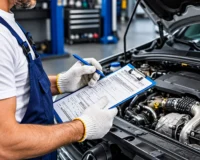

A used car inspection checklist helps Queensland buyers assess a vehicle’s mechanical condition, history and paperwork before committing to a purchase. Checking the engine, brakes, tyres and service records can reveal potential mechanical problems, while a Personal Property Securities Register (PPSR) search can identify registered financial interests and available stolen or written-off vehicle information.
Even a car that looks well maintained and performs normally during a short test drive can have hidden faults. Previous accident repairs, incomplete servicing records and developing transmission problems may not be obvious without a closer inspection. Reviewing both the vehicle and its documentation gives you a better understanding of what you are buying.
Queensland also has specific rules covering safety certificates, registration transfers and used-car sales. This guide explains what to inspect, which documents to request and how an independent pre-purchase inspection on the Gold Coast can help you make a more informed decision.
Used Car Inspection Checklist: What Should You Check?
Before purchasing a second-hand vehicle, examine its condition and review the supporting documents. This 22-point checklist covers the mechanical, vehicle-history and legal checks worth completing before making payment.
Vehicle Details and History
- Confirm the vehicle identification number (VIN) matches the documentation.
- Check the registration status and expiry date.
- Review the service history and maintenance records.
- Compare the odometer reading with previous service records.
- Complete a PPSR search using the VIN.
- Ask about previous accidents, repairs and modifications.
Exterior and Interior
- Look for dents, rust, scratches and mismatched paint.
- Check tyre condition, tread depth and uneven wear.
- Inspect windows, lights, mirrors and the windscreen.
- Check for moisture, mould or water damage inside.
- Test windows, air conditioning and electronic accessories.
Mechanical Condition
- Look for visible engine oil and coolant leaks.
- Check accessible fluid levels and condition.
- Listen for unusual engine noises during a cold start.
- Check brakes, steering and suspension behaviour.
- Inspect for dashboard warning lights.
- Look for unusual exhaust smoke or overheating.
Test Drive and Purchase
- Arrange a test drive where lawful, insured and safe.
- Assess acceleration, braking and transmission operation.
- Book an independent pre-purchase inspection.
- Check the current Queensland safety certificate where required.
- Confirm the purchase documents and registration transfer requirements.
Some checks can be completed while viewing the vehicle, while others require an official search or professional assessment. If you identify a significant concern, investigate it before paying a deposit or signing a purchase agreement.
1. Check the Vehicle’s Service History
A vehicle’s service history provides useful information about how it has been maintained and whether important maintenance tasks have been completed. Ask the seller for service logbooks, workshop invoices and records of major repairs, then compare the dates and odometer readings with the manufacturer’s recommended servicing intervals.
Pay particular attention to gaps in the maintenance history, especially when assessing an older vehicle. According to the Bureau of Infrastructure and Transport Research Economics’ January 2026 vehicle registration report, registered passenger vehicles in Queensland had an average age of 11.65 years as at 31 January 2026. This figure describes the registered vehicle fleet rather than the condition of cars offered for sale, but it provides useful context for why maintenance records matter when assessing vehicles of different ages.
Important records to review include:
- Regular oil changes and scheduled servicing
- Brake, tyre and battery replacement records
- Timing belt replacement records, where applicable
- Major repairs and associated invoices
- Consistent odometer readings across service documents
A documented history may reveal recurring problems, recent mechanical repairs or components that have already been replaced. If the seller claims that expensive maintenance has been completed, ask for invoices or other records that support the claim.
Missing service records do not automatically mean a vehicle is in poor condition, but they create uncertainty about previous maintenance. An independent mechanical inspection can help assess its current condition when the documentation is incomplete.
2. Inspect the Exterior for Accident Damage and Rust
The exterior can provide clues about previous accidents, body repairs and general vehicle care. Walk around the car in good lighting and inspect its panels from different angles, paying attention to differences in paint colour, panel alignment and surface condition.
Uneven panel gaps, overspray around seals and mismatched paint finishes may indicate previous repairs. These signs do not necessarily mean the vehicle has suffered serious damage, but they justify asking the seller about its accident and repair history.
Rust is another concern, particularly around wheel arches, door edges, the underbody and areas where moisture collects. Vehicles exposed to coastal conditions, including those driven around the Gold Coast, may experience corrosion over time, especially where protective coatings have been damaged.
Minor scratches, stone chips and cosmetic wear are common in used vehicles. Significant corrosion, poorly repaired structural damage or unexplained differences between body panels deserve further investigation before purchase.
3. Check the Tyres, Brakes and Suspension
Tyres, brakes and suspension components influence vehicle handling, stability and stopping performance. Start by examining the tyres for visible damage, uneven wear and insufficient tread depth, then look for signs that they may have been driven with incorrect inflation pressure.
Uneven tyre wear can indicate wheel alignment problems or worn steering and suspension components. Inspect the wheels for visible damage and examine accessible brake components for unusual wear, corrosion or obvious defects.
During a test drive, pay attention to grinding noises, vibration when braking or the vehicle pulling to one side. Suspension problems may also become noticeable through knocking sounds over bumps, excessive bouncing or unstable handling.
These symptoms do not identify a particular fault on their own. A qualified mechanic may need to inspect the relevant components to determine the cause, assess their condition and recommend any necessary repairs.
4. Inspect the Engine and Look for Fluid Leaks
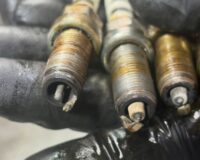
Engine repairs can be expensive, making the engine’s visible condition an important part of assessing a used vehicle. Before starting the car, inspect the engine bay for fluid leaks, damaged hoses, loose connections and obvious signs of poor maintenance.
Look for oil residue around engine components, coolant leaks and evidence of previous overheating. Where the manufacturer’s instructions permit, check accessible fluid levels and look for contamination or unusual fluid condition.
A clean engine bay may suggest that the vehicle has been maintained, but recently cleaned surfaces can also make leaks harder to identify. Appearance alone should therefore not be treated as proof of good mechanical condition.
If possible, ask to inspect the vehicle before the engine has been warmed up. A cold start may reveal starting difficulties, rough running or unusual noises that become less noticeable once the engine reaches operating temperature.
Never remove a cooling system pressure cap while the engine is hot. Significant leaks, overheating or abnormal engine behaviour should be investigated before proceeding with the purchase.
5. Test the Transmission and Steering
Transmission problems can be expensive to diagnose and repair, so their operation deserves particular attention during a test drive. Observe how the vehicle accelerates, responds to the throttle and changes gears under normal driving conditions.
For automatic vehicles, watch for delayed engagement, harsh shifting, slipping or unusual noises. In a manual vehicle, pay attention to clutch engagement, gear selection and grinding or resistance when changing gears.
Steering should feel consistent and responsive without excessive free play or unexpected vibration. Difficulty maintaining a straight path may indicate problems involving the steering system, tyres, wheel alignment or suspension.
If the vehicle behaves unpredictably or develops a serious mechanical problem during the test drive, stop driving when it is safe. Further inspection is preferable to continuing with a vehicle that may be unsafe.
6. Check the Interior and Electrical Features
The interior can reveal signs of general wear, poor maintenance, electrical faults and previous water damage. Inspect the seats, carpets, dashboard, door trims and accessible storage areas, looking for unusual stains, deterioration or components that do not operate correctly.
Musty odours, damp carpets, water marks or corrosion around electrical connections may indicate previous moisture exposure. These signs do not prove flood damage, but they should prompt questions about the vehicle’s history and condition.
Test the air conditioning, power windows, central locking, infotainment system, interior lights and other fitted accessories. Check that dashboard warning lights behave normally during startup and that unexpected warning indicators do not remain illuminated after the engine starts.
Some electrical problems occur intermittently, so a short inspection may not reveal every fault. If several electrical features behave unusually, further diagnostic testing may be worthwhile before purchase.
7. Take the Car for a Proper Test Drive
A test drive provides an opportunity to assess how the vehicle behaves under normal operating conditions. With the seller’s permission, appropriate insurance and a lawful driving arrangement, check starting, acceleration, braking, steering and transmission performance.
Where traffic and road conditions permit, drive at different normal road speeds and pay attention to unusual noises, vibration or changes in handling. The vehicle should respond predictably, and unexpected dashboard warning lights should be investigated rather than dismissed.
After the test drive, check for new fluid leaks, unusual smells or signs of overheating. These observations may reveal problems that were not apparent when the vehicle was stationary.
A successful test drive is useful, but it cannot confirm the condition of every mechanical component. Internal wear, intermittent electrical faults and some previous repairs may only become apparent through diagnostic testing or a professional inspection.
8. Check the Queensland Safety Certificate
In Queensland, a current safety certificate is generally required when transferring the registration of a used light vehicle, unless an exemption applies. The certificate confirms that the vehicle met prescribed minimum safety standards at the time of inspection, covering components such as tyres, brakes, steering, suspension, body rust or damage, the windscreen and lights.
A Queensland safety certificate is not a full mechanical inspection and does not guarantee the vehicle’s future reliability. The Queensland Government’s safety certificate guidance specifically distinguishes these inspections from a broader assessment of mechanical condition.
The certificate’s validity period depends on who is selling the vehicle:
- Licensed motor dealers: Three months or 1,000 kilometres, whichever expires first.
- Private sellers and other non-dealer sellers: Two months or 2,000 kilometres, whichever expires first.
A certificate is valid for one transfer only, and a new one may be required if the relevant time or distance limits have been reached. Queensland no longer requires a safety certificate before a registered vehicle is advertised for sale, but one is generally needed before the seller disposes of the vehicle, unless an exemption applies.
Safety certificates can only be issued by Queensland Approved Inspection Stations (AIS). Before purchasing, confirm that the certificate is current, corresponds to the vehicle and satisfies the requirements for the transaction.
9. Complete a PPSR Check Before Paying
A Personal Property Securities Register (PPSR) search is one of the most useful administrative checks when purchasing a second-hand vehicle. It can identify registered security interests, such as finance secured against the car, and may provide available stolen or written-off vehicle information.
This is particularly important when buying privately because an outstanding security interest can create a risk of repossession. If the previous owner has not repaid a secured loan, the lender may have rights over the vehicle even after it changes hands.
The official Australian Government PPSR offers an online vehicle search for $2. You will generally need the vehicle identification number (VIN), which should be checked against the car itself rather than copied solely from the advertisement.
The PPSR recommends conducting a search on the day of purchase or the day before. Searching close to the transaction provides current information and can help protect buyers if someone later claims a security interest in the vehicle.
If the search identifies an existing security interest, ask for an explanation and arrange for it to be properly discharged before completing the purchase. Do not assume that paying the seller automatically clears the outstanding finance.
A clear PPSR search does not confirm the vehicle’s mechanical condition, establish its ownership history or guarantee that every previous incident has been recorded. Stolen and written-off information can also be incomplete or subject to reporting delays, so the search should be used alongside the other checks in this guide.
Complete an official PPSR vehicle search before finalising your purchase.
10. Understand Queensland Registration and Ownership Requirements
Before purchasing a used vehicle, verify its identification details and understand how registration will be transferred. The VIN, registration number, vehicle description and supporting documents should correspond with the car being offered for sale.
You can use the Queensland Government’s registration status check to confirm registration details and the recorded expiry date. However, registration information does not establish legal ownership, so you should also check the seller’s identity, supporting documents and PPSR results.
When buying a vehicle with an existing Queensland registration, the buyer must generally transfer the registration into their name within 14 days of acquiring it. The process involves the seller completing their part of the transfer and the buyer completing the transfer and paying any applicable fees and duty.
For a registered vehicle transfer, the seller must ordinarily provide a current safety certificate unless an exemption applies. Additional documentation may be required for particular vehicles or modifications, including certain gas systems.
Different procedures apply when buying an unregistered vehicle or one registered interstate. Confirm the requirements before paying, particularly if you intend to drive the vehicle immediately after purchase.
Further information is available through the Queensland registration transfer guide for buyers.
11. Know the Difference Between Buying Privately and From a Dealer
Your legal protections can differ considerably depending on whether you buy a used vehicle from a licensed motor dealer or a private seller. Understanding these differences is particularly important when purchasing an older vehicle or one with limited servicing records.
Licensed dealers have obligations under Australian Consumer Law and Queensland motor dealer legislation. Private sales generally offer fewer protections relating to vehicle quality, although limited guarantees concerning ownership and undisclosed securities still apply.
| Buying from a licensed dealer | Buying from a private seller |
| Australian Consumer Law quality guarantees generally apply | Most quality-related consumer guarantees do not apply |
| Eligible vehicles receive a statutory warranty | No dealer-style statutory warranty |
| A one-business-day cooling-off period generally applies to eligible sales | No statutory cooling-off period |
| Dealer must provide a clear title guarantee | Limited title-related guarantees apply, but buyers should independently check financial interests |
| Dealer must meet licensing and disclosure obligations | Fewer statutory selling obligations and buyer protections |
Dealer Warranties and Cooling-Off Periods
Queensland has Class A and Class B statutory warranties for eligible used vehicles sold through licensed motor dealers and certain auction transactions. The applicable category depends on the vehicle’s age, odometer reading and any relevant exemptions.
A Class A statutory warranty generally applies when the vehicle is no more than 10 years old and has travelled less than 160,000 kilometres. It lasts for three months or 5,000 kilometres, whichever comes first. Class B generally applies when the vehicle is more than 10 years old or has travelled at least 160,000 kilometres, and lasts for one month or 1,000 kilometres, whichever comes first.
Statutory warranties do not cover every component or type of damage. Australian Consumer Law protections are separate and may continue to apply after the statutory warranty expires, depending on the circumstances.
Eligible used-car purchases from licensed motor dealers also generally include a one-business-day cooling-off period. Taking the vehicle home during this period can end that protection, although test drives and independent mechanical inspections do not have the same effect.
What Changes When Buying Privately?
Private sellers are not generally subject to the same statutory warranty or cooling-off requirements as licensed motor dealers. Most consumer guarantees relating to vehicle quality do not apply to ordinary private sales.
However, certain guarantees concerning clear title, undisturbed possession and freedom from undisclosed securities still apply. These limited protections do not replace the need to verify the seller’s identity, check the vehicle’s documents and complete a PPSR search.
If you are uncertain about your rights or the terms of a purchase agreement, seek advice before signing. The Queensland Government’s used vehicle buying guidance and ACCC consumer guarantees guidance explain the principal protections that apply to different types of sales.
12. Arrange a Professional Pre-Purchase Car Inspection
A visual inspection and test drive can reveal obvious mechanical concerns, but some faults are difficult to identify without suitable training, tools and diagnostic equipment. An independent pre-purchase inspection provides a more detailed assessment of the vehicle’s condition before you commit to buying it.
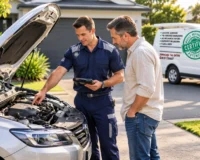
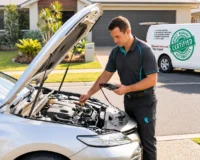
A professional pre-purchase car inspection on the Gold Coast may involve checking accessible mechanical components, investigating visible faults and assessing vehicle performance during a road test. The exact work depends on the inspection provider, selected package and whether the car can be examined safely.
Depending on the inspection offered, a qualified mechanic may assess:
- Engine operation and visible fluid leaks
- Transmission and drivetrain performance
- Brake wear and operation
- Steering and suspension components
- Tyre condition and wear patterns
- Battery and accessible electrical systems
- Dashboard warning lights and diagnostic fault codes
- Cooling system condition
- Evidence of previous damage or mechanical repairs
The findings may identify components requiring replacement, further diagnosis or a more detailed specialist inspection. This information can help you understand the vehicle’s condition and consider potential repair costs before making a purchasing decision.
A pre-purchase inspection cannot guarantee that a vehicle is free from every hidden defect. Internal engine damage, concealed accident repairs and intermittent electrical problems may require testing beyond the agreed inspection scope.
Certified Automotive offers pre-purchase vehicle inspections on the Gold Coast using its mobile service vehicles and workshop facilities. The company’s published service information includes mechanical checks of brakes, tyres, suspension, gearbox, driveline, cooling and electrical systems, along with road testing and a written report.
Arranging an independent inspection before completing the purchase can provide information that is difficult to obtain from a brief viewing or test drive alone.
What Are the Warning Signs of a Problem Used Car?
Certain findings should prompt further investigation before you agree to buy a vehicle. Some suggest potential mechanical faults, while others raise questions about its history or the accuracy of information provided by the seller.
Warning signs worth investigating include:
- Inconsistent odometer readings: May indicate incorrect records or possible odometer tampering.
- White or blue exhaust smoke: Can indicate engine, cooling system or oil consumption problems, depending on the circumstances.
- Grinding during braking: May suggest worn or damaged brake components.
- Transmission slipping or harsh shifting: Can indicate transmission faults requiring further diagnosis.
- Visible coolant or oil leaks: May point to deteriorated seals, hoses or mechanical components.
- Uneven panel gaps or paint differences: May indicate previous accident damage or body repairs.
- Persistent dashboard warning lights: Can indicate faults in electronic or mechanical systems.
- Missing servicing records: Creates uncertainty about the vehicle’s maintenance history.
- Refusal to allow an independent inspection: Raises concerns when the seller cannot provide a reasonable explanation.
A single warning sign does not automatically mean the vehicle should be rejected. Some problems are relatively straightforward to repair, while others can involve substantial costs or affect vehicle safety.
If a significant fault is identified, ask for further testing or a repair estimate before deciding whether to proceed. When the seller refuses reasonable inspections or cannot explain major inconsistencies, it may be sensible to consider another vehicle.
How Much Does a Pre-Purchase Inspection Cost on the Gold Coast?
The cost of a pre-purchase inspection varies according to the vehicle, inspection provider, location and level of assessment required. A basic inspection may concentrate on accessible mechanical components and general vehicle condition, while a more detailed service can involve additional testing.
Some inspection packages include diagnostic scans, road testing and written reports, while others may charge separately for these services. Confirming the inclusions before booking helps you understand what the mechanic will examine and which faults may fall outside the inspection scope.
An inspection fee adds to the initial purchase cost, but identifying significant mechanical problems beforehand can help you make a more informed financial decision. The findings may also help you decide whether the asking price is reasonable in light of any repairs required.
Before arranging an inspection, request a quote and clarify any exclusions. If the vehicle is located at a dealership or private property, confirm that the seller will permit the mechanic to access and inspect it.
What Should You Do After the Inspection?
Once the inspection is complete, review the findings carefully rather than relying only on a general assessment of the vehicle’s suitability. Ask the mechanic to explain any identified faults and distinguish between routine maintenance items, repairs that should be addressed soon and serious mechanical concerns.
If repairs are needed, request estimates where possible. Understanding the likely costs can help you decide whether to negotiate the purchase price, ask the seller to address particular issues or choose another vehicle.
Consider the inspection report alongside the service history, PPSR results and registration information. Each provides a different part of the overall picture, and none can independently confirm that the vehicle is free from every problem.
Before finalising the transaction, check that the purchase documents are accurate and that the applicable safety certificate and registration transfer requirements have been met. Keep copies of important documents, search results and inspection reports for your records.
Frequently Asked Questions
Is a roadworthy certificate enough when buying a used car in Queensland?
No. A Queensland safety certificate assesses whether the vehicle meets prescribed minimum safety standards at the time of inspection, but it is not a full mechanical assessment. An independent pre-purchase inspection can provide additional information about engine condition, transmission operation and potential repair requirements.
Should I get a pre-purchase inspection for a car from a dealership?
An independent inspection is worth considering even when buying from a licensed dealer. Statutory warranties and consumer guarantees provide certain legal protections, but an inspection can identify existing maintenance concerns and help you assess the vehicle before committing to the purchase.
Can a mobile mechanic inspect a used car before I buy it?
Yes. Mobile mechanics may provide pre-purchase inspections at dealerships, private properties and other suitable locations, subject to access, permission and appointment availability. The seller should agree to the inspection, and the mechanic will need a safe area to carry out the required checks.
Does a pre-purchase inspection include a PPSR check?
It depends on the inspection provider and package. Some services may include vehicle history checks, but you should confirm this before booking or complete your own official PPSR search close to the purchase date.
Can a pre-purchase inspection identify accident damage?
A mechanic may identify visible evidence of previous repairs, structural concerns or inconsistent panel condition. However, concealed damage can be difficult to detect without dismantling components or using specialist inspection equipment, so not every previous repair will necessarily be identified.
How long does a pre-purchase car inspection take?
The time required depends on the vehicle, inspection scope and whether additional testing is needed. A basic mechanical assessment may take less time than a detailed inspection involving diagnostic testing and a road test, so confirm the expected appointment duration with the provider.
Can I negotiate the price after finding mechanical problems?
Yes. Inspection findings can provide a basis for discussing the asking price with the seller. Depending on the faults identified, you may request a price adjustment, ask for repairs to be completed before purchase or decide not to proceed.
Who should pay for a pre-purchase inspection?
The prospective buyer usually arranges and pays for an independent inspection, although the buyer and seller can agree on different arrangements. Before booking, confirm the inspection cost, what is included and whether the seller will allow access to the vehicle.
Book a Pre-Purchase Car Inspection on the Gold Coast
Buying a used vehicle involves checking more than its appearance and how it performs during a short test drive. Reviewing its servicing history, verifying registration and PPSR information, and assessing its mechanical condition can help you identify concerns before committing to the purchase.
Certified Automotive provides pre-purchase vehicle inspections for Gold Coast buyers, with mobile inspection options and workshop facilities available. Its mechanics can assess accessible vehicle components, investigate potential faults and provide a written report to help you understand the vehicle’s condition.
If you have found a used car you are considering buying, contact the team with its details and location. They can explain the available inspection options, confirm appointment availability and provide a quote before you proceed.
Book a pre-purchase inspection with Certified Automotive before finalising your used-car purchase.