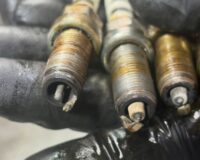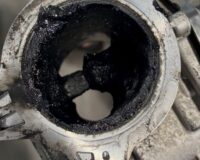
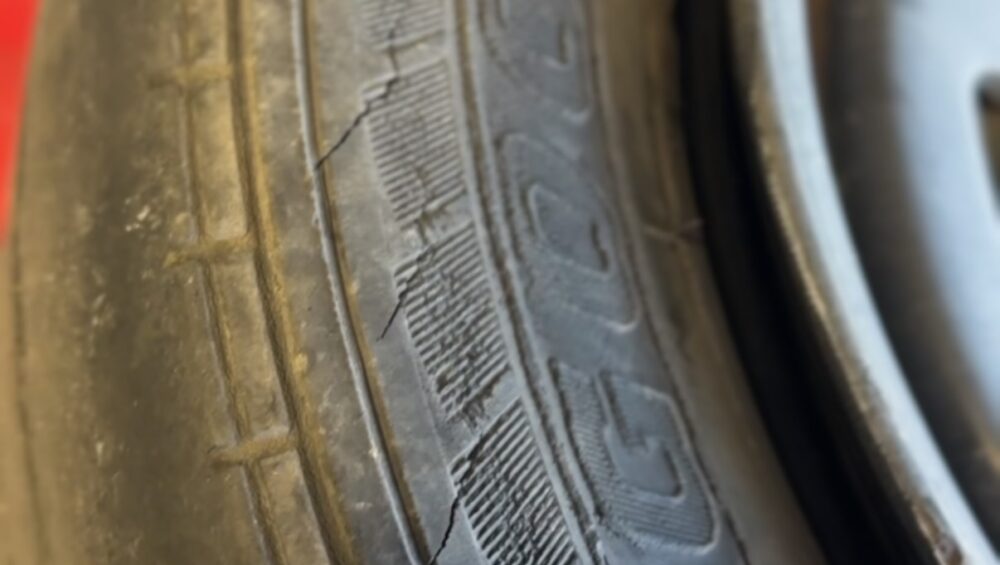
This Toyota HiAce came in for a general service, and we’re glad it did. Tyres are easily overlooked, but a close inspection revealed severe tyre sidewall cracking. These tyres weren’t safe to keep on the road, and the van left with a set of four new tyres.
The job at a glance
- Vehicle: Toyota HiAce
- Problem: Severe cracking right through the tyre sidewalls
- Fix: Set of four new tyres fitted
The cracked sidewalls we found on this HiAce during its general service.
What causes tyre sidewall cracking?
Sidewall cracking isn’t just cosmetic. It’s a sign the rubber has deteriorated with age and exposure. Tyre rubber contains oils and protective compounds that keep it flexible. Over time, heat, sunlight (UV) and ozone break those down, and the rubber dries out, hardens and starts to crack.
Queensland conditions speed this up. Hot roads, strong sun and vehicles parked outside all day take a toll, and vans and utes that carry heavy loads put extra stress on the sidewalls.
Why cracked tyres are dangerous
Once tyres get to this stage, they’re at a much higher risk of sudden failure, especially in our Queensland heat or when carrying heavy loads. Cracks can let moisture reach the internal structure of the tyre and weaken it from the inside. The result can be a blowout or tread separation with little or no warning.
Tyres don’t just wear out. They also age out. A tyre with plenty of tread can still be unsafe if the rubber has perished.
How to check your tyres
A five-minute inspection could prevent a dangerous blowout. Here’s what to look for:
- Cracks in the sidewall or between the tread blocks, especially fine cracks that look like a spider web
- Bulges or bubbles on the sidewall, which can mean internal damage
- Tread depth: tyres must be replaced before the tread wears down to the 1.5 mm wear indicators
- Uneven wear, which can point to alignment or suspension problems
- Tyre age: the four-digit date code on the sidewall shows the week and year it was made. For example, 2319 means week 23 of 2019
Many tyre manufacturers recommend having tyres inspected every year once they’re five years old, and replacing them at around ten years old regardless of tread. Spare tyres age too, even if they’ve never been used.
Can cracked tyres be repaired?
No. Cracking is a sign the rubber itself has deteriorated, so there’s nothing to repair. Sidewall damage of any kind is a reason to replace the tyre, not patch it. If one tyre is cracked from age, the others on the vehicle are usually the same age and worth checking closely too.
New tyres at our Mudgeeraba workshop
If your tyres are more than a few years old, or you haven’t had them inspected recently, it’s worth having them checked. We look at tyre condition on every logbook service, and new tyres are supplied and fitted at our Mudgeeraba workshop.
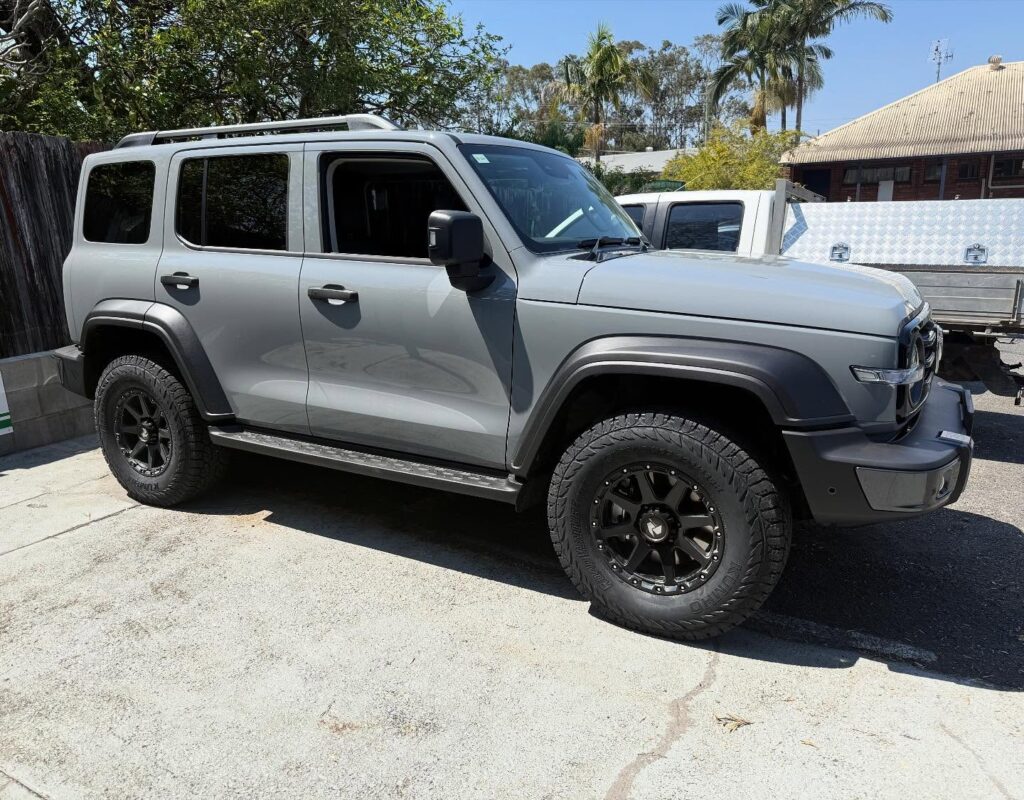
From work vans like this HiAce to 4WDs like the GWM Tank 300 above, we can help you choose the right tyre for how you drive. Don’t wait until your tyres make the decision for you. Call 0478 499 369 or contact us for a tyre quote.
Need new tyres on the Gold Coast?
Tyres are supplied and fitted at our Mudgeeraba workshop at 11/55 Railway St, and we check tyre condition on every logbook service.
Call 0478 499 369 for a free quote, or send us a message.